Done-For-You Local SEO Campaign
Google Maps optimization, technical on-page fixes, city page creation, and a custom tiered backlink stack—all managed for you every single month.
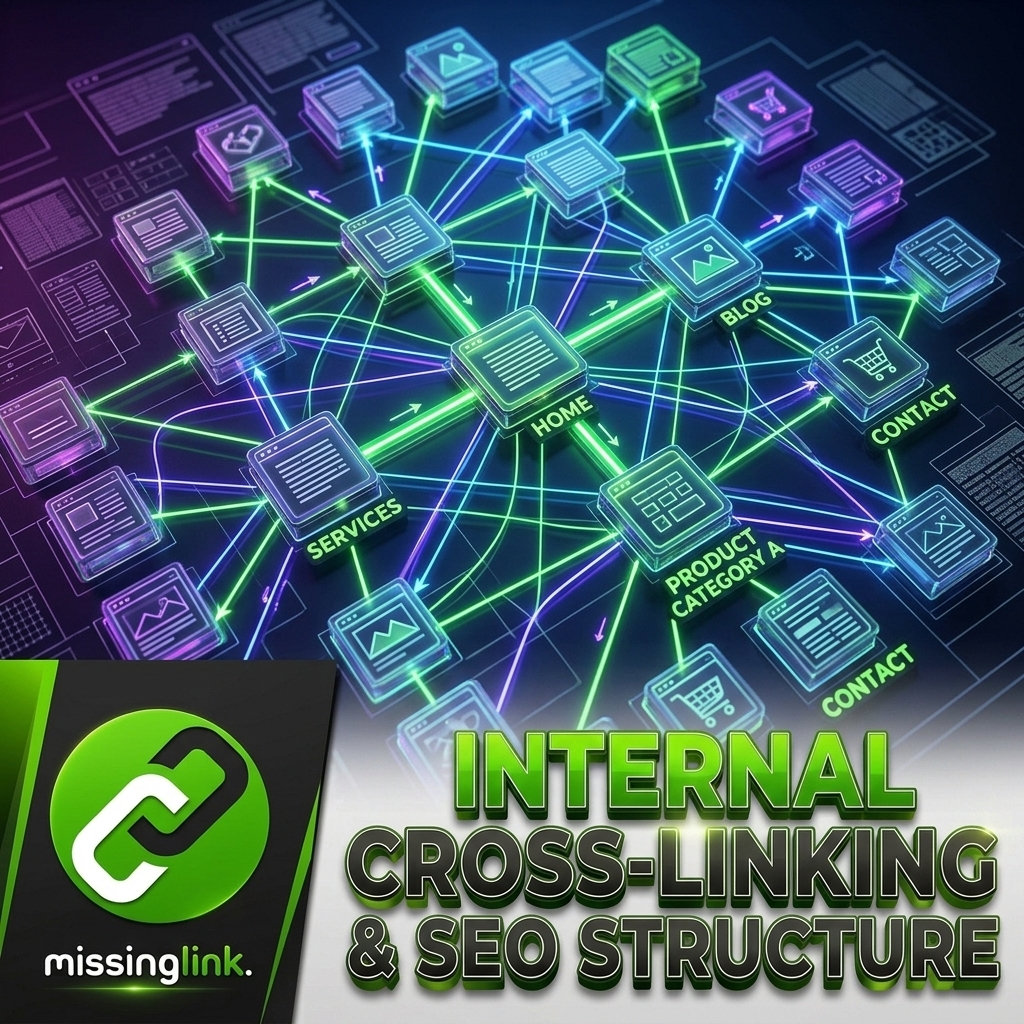
Most local businesses treat their website pages as isolated islands. They might have a homepage, a few service pages, and a contact page, but there is no connective tissue holding them together. In the eyes of Google’s algorithm, isolated pages are weak pages.
If you want to dominate the Local Maps 3-Pack and rank highly in organic search, you must implement a deliberate, structured internal cross-linking strategy. Internal linking is how you distribute trust, pass link equity (PageRank), and establish semantic relevance across your entire domain.
Why Cross-Linking is Critical for Local SEO
When you build an external backlink or receive a burst of local authority, that power enters your site through a specific page (usually the homepage). If your site lacks a strong internal linking structure, that power gets trapped. It never flows to the inner service pages or location hubs that actually need the ranking boost.
Furthermore, Google uses internal links to understand the hierarchy and relationship between your pages. If five different sub-service pages all link up to a core "Water Heater Repair" category page, Google instantly understands that the category page is the most important hub for that topic.
The Correct Way to Cross-Link a Local Website
Do not just randomly hyperlink words in your paragraphs. A local SEO cross-linking strategy must be architectural. Follow these core rules to build a link graph that search crawlers love:
1. Top-Down Semantic Siloing (The Parent-Child Relationship)
Your cross-linking must respect the structure of your Google Business Profile (GBP) categories. If you have a primary service page (e.g., /plumbing-repair/), and nested sub-services (e.g., /plumbing-repair/pipe-leak/), the linking must flow vertically.
- The Homepage links down to the Primary Service page.
- The Primary Service page links down to its specific Nested Sub-Services.
- Crucially: The Nested Sub-Services must link back up to the Primary Service page. This upward link signals that the parent page is the definitive topical hub.
2. Strict Horizontal Isolation
Do not cross-link between unrelated service silos. A page about "AC Repair" should not link to a page about "Electrical Panel Upgrades" just because they are on the same website. Horizontal linking between unrelated silos confuses the semantic relevance of the pages. Keep the link equity trapped inside its specific topical silo to maximize relevance.
3. Use Exact and Partial Match Anchor Text
Unlike external backlinks (where over-optimizing your anchor text can trigger a spam penalty), Google gives you far more leeway with internal links. Use this to your advantage.
When a sub-service page links back up to the parent category, use exact or partial match anchor text. For example, instead of linking the word "click here," hyperlink the phrase "our comprehensive drain cleaning services." This feeds direct context to the search algorithm.
4. The "Location to Service" Bridge
If you have dedicated location pages (e.g., /areas-we-serve/austin-tx/), they must link to the specific services offered in that area. This bridges your geographic authority with your topical authority. When linking from a city page to a service page, use a highly specific anchor like "expert HVAC repair in Austin."
The Power of the HTML Sitemap
Even with perfect siloing, crawlers can sometimes miss deep pages. Every local website should include a static HTML sitemap linked in the footer. This is not the XML sitemap submitted to Search Console—this is a user-facing page that lists an organized, hierarchical blueprint of every page on your site. It ensures that no page on your domain is more than two clicks away from the homepage, guaranteeing a 100% crawl rate.
Stop Stranding Your Best Content
Building 30 well-written service pages means nothing if Google cannot discover them or understand how they relate to your business entity. By implementing a strict, top-down siloing strategy, you ensure that every drop of authority your homepage earns is efficiently distributed down to the nested pages that drive your local leads.
This is what I use for maps. It allows map grid tracking, citations on autopilot, and a full CRM to nurture and grow client leads into sales.
Interlink Your Silos Perfectly:
Does your site have trapped link equity? Our Done-For-You Local SEO Campaign includes complete internal link restructuring to ensure maximum ranking power flows to your most important local pages.
Supercharge Your New Silos
Once your internal links are fixed, you need external power to push them up. Order our Niche Relevant Stacked Web 2.0 Links to drive authority into your newly connected silos.
Ready to Build Real SEO Authority?
Stop guessing and start ranking. Send us a message and we'll analyze your current link profile and map out a clear path to local dominance.
Contact MissingLink SEO